



Koala Blog Coer

Elevating Accessibility: Selecting the Right Universal Changing Table

As expectations of inclusivity in public buildings continue to evolve, facility managers and architects are looking beyond basic requirements to create truly accessible environments that include an adjustable-height adult-size changing station.

While standard ADA requirements for restrooms provide essential wheelchair access, there is a growing recognition of the need for dedicated restroom accommodations for those individuals who require a private, elevated surface for personal care. Providing these amenities is no longer a value-add, it is a hallmark of a modern, high-functioning public space.

When planning to integrate an adult changing station, also known as a universal changing table, into your space, success depends on more than just selecting a model; it requires a thorough understanding of the usage, space, and structural demands of the installation to ensure a safe, long-term solution for your building. 

What is an adult changing station?

An adult changing station is a wall-mounted, height-adjustable platform designed to support individuals who need assistance for restroom use or changing and are too large for a baby changing station. These are devices engineered with high weight capacities and powered lift systems to facilitate safe transfers from wheelchairs.

Integrating an adjustable-height adult changing station into a facility requires more than floor space; it requires a private area and specific structural, electrical, and durability considerations.

Choosing the Model by Environment

What’s the difference between Koala Kare Products’ KB3000 and KB2600 Adult Changing Stations? To select the optimal model for your project, consider the environment where it will be used, the level of use, and public access points.

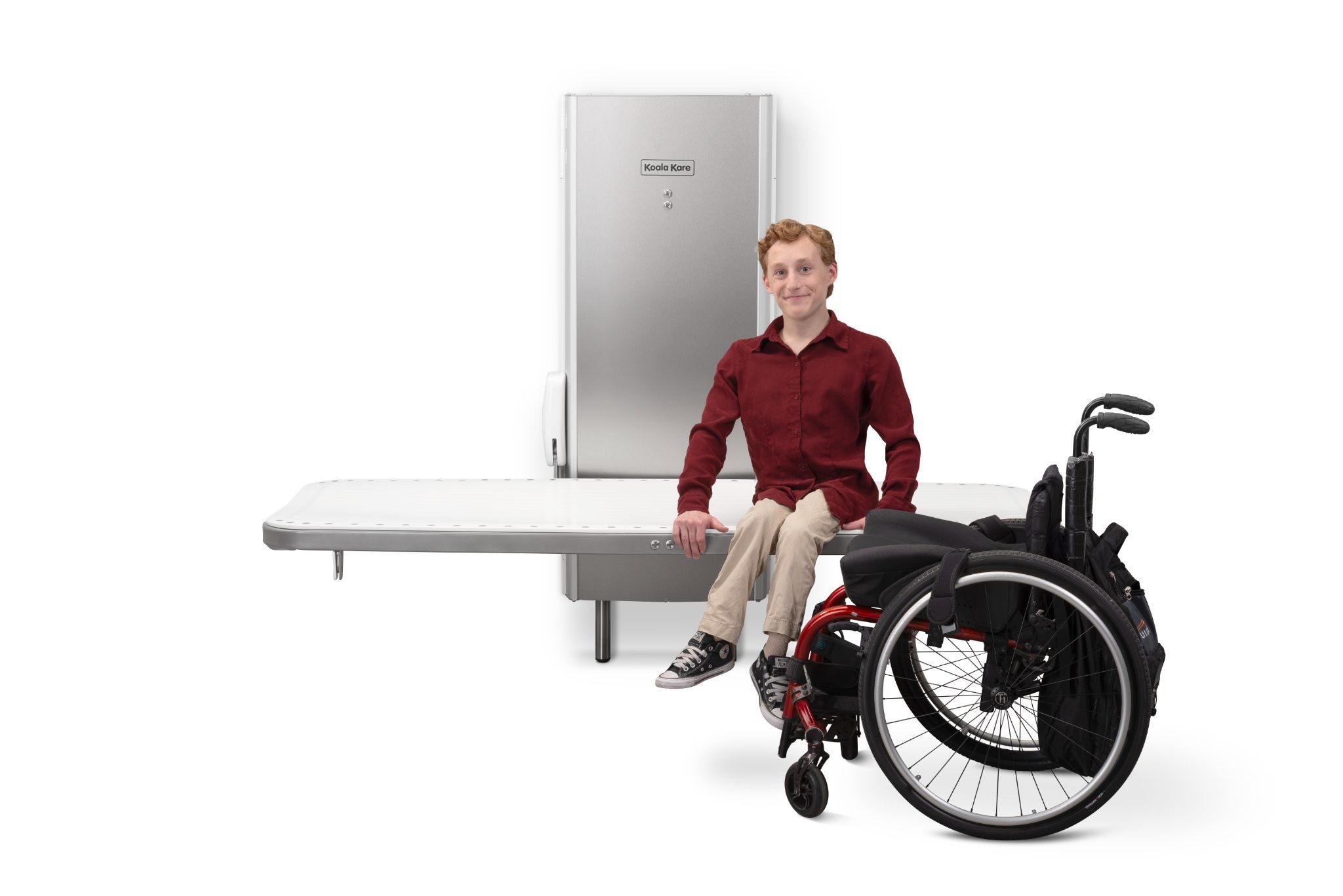
A man sits on the lowered table of Koala Kare Products’ KB3000 Adult Changing Station.

High-Traffic Environments: KB3000

Best for: Airports, stadiums, and transit hubs

  • Vandalism-resistant engineering: Holds an IK10 rating (the highest impact resistance) and features a cut-resistant polyethylene changing surface.
  • Integrated control system: Has height controls built directly into the wall panel and the front of the bed so there are no exposed cables or remotes, mitigating risk in unsupervised areas.
  • Enhanced accessibility: Lowers to 12 inches from the floor (300mm) for easier wheelchair transfers and features a curved dip in the safety guard for ergonomic caregiver access. 
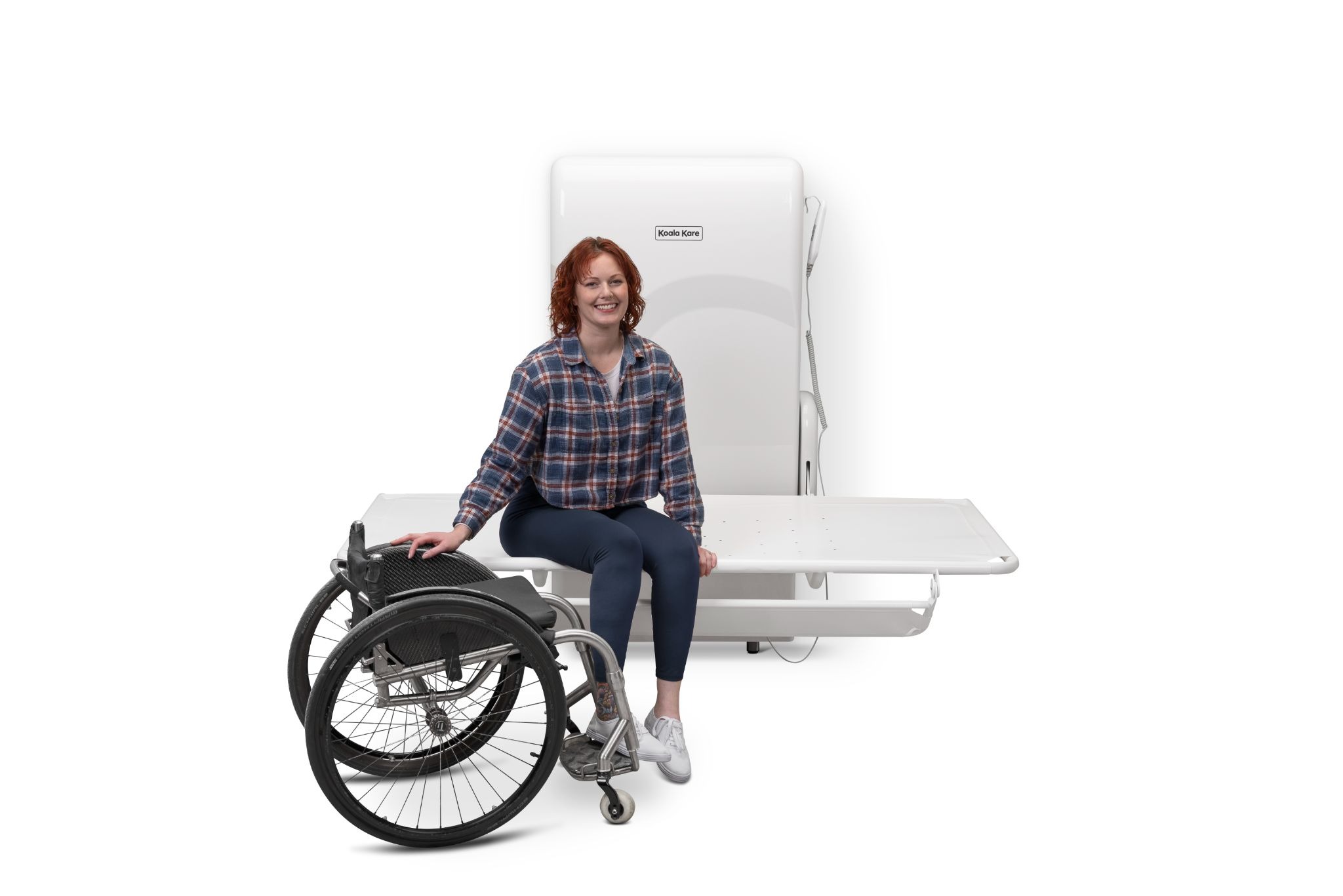
A woman sits on the lowered table of Koala Kare Products’ KB2600 Adult Changing Station.

Controlled and Clinical Environments

Best for: Hospitals, retail, and care facilities

  • Aesthetic integration: Has a clean, contemporary design that fits modern commercial interiors.
  • Handheld operation: Uses a wired remote (IK9 rated) that provides caregivers with flexibility during the changing process in a supervised setting.
  • Surface: Uses a high-tension, non-rip vinyl stretcher for patient comfort and easy sanitation.

Technical Specification Comparison

Specification KB3000 KB2600
Best for Airports or schools Hospitals or retail centers
Safe Working Load 500 lbs. (227 kg.)  440 lbs. (200 kg.) 
Stretcher Surface Cut-resistant and antistatic polyethylene  High-tension vinyl 
Impact Range IK10 IK9
Height Range 12″ – 41″ (300mm – 1,040mm) 13.7″ – 37.4″ (350mm – 950mm)
Electrical Safety ISO 60601-1 / ISO 60601-2 UL 962 / CSA C22.2


Critical Installation and Rough-In Requirements

Unlike baby changing stations, adult changing stations are heavy-duty electrical machinery. Successful integration starts at the framing stage.

Structural Reinforcement

The static and dynamic load of these units is significant.

  • Wall construction: Must be flat and able to bear a load of 1,250 lbs. (566 kg.)
  • Marine plywood backing: Koala Kare Products requires 1-inch-thick (25mm) marine plywood facing that extends from floor to ceiling, secured every 7 7/8 inches.
  • Blocking conflict: Ensure horizontal cross members do not align with the station’s mounting points to avoid drilling into structural hardware during final fit-out. 

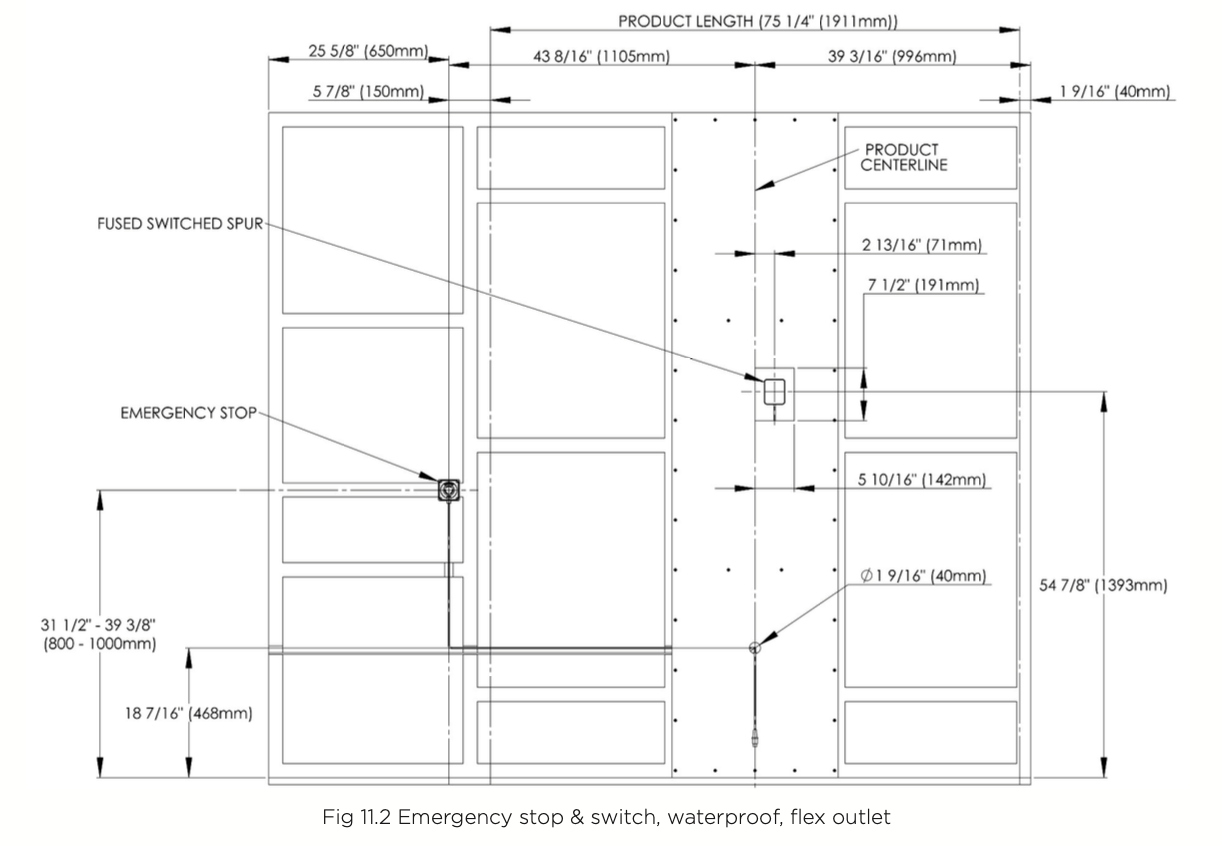
Alt tag: A diagram from the KB3000 installation guide that shows the fittings for the emergency stop and the switched, waterproof flex outlet. A diagram from the KB3000 installation guide that shows the fittings for the emergency stop and the switched, waterproof flex outlet. 

Electrical and Space Planning

  • Power supply: Requires a Class II power supply via an isolatable flex outlet on a GFCI protected circuit.
  • Spatial footprint: Needs at least a 108 5/16-inch (2751mm) area to ensure adequate clearance at both ends of the unit for caregiver movement.
  • Concealed wiring: The KB3000 requires the electrical rough-in to be positioned precisely behind the unit to conceal all wiring in order to maintain its vandalism-resistant status.

Koala Kare Products have created comprehensive installation and user guides for the KB3000 and the KB2600 that detail the technical specification, overall dimensions, and more.

Compliance and Safety

From a facility management perspective, liability and uptime are paramount. Both models are engineered with critical safety features.

  • Battery backup system: Every unit includes a built-in battery to ensure that in the event of a building power failure, the table can still be lowered.
  • Emergency stop: The KB3000 features a dedicated emergency stop button, giving caregivers immediate control to halt movement if an obstruction is detected.
  • Water resistance: Both units are IPX4 rated, making them suitable for wet environments and allowing for standard restroom cleaning protocols without damaging the electrical components. 

Final Steps Before Purchasing an Adult Changing Station

Navigating the purchasing process for specialized equipment requires local expertise. To move from the design phase to procurement, architects and facility managers can use the following resources:

  • Know before you buy: Before finalizing your purchase, use Koala Kare Products’ legislation map to determine whether your specific jurisdiction has mandated adult changing stations, ensuring your facility is compliant with state or local codes.
  • Product selection guide: Review the specifications, resources, installation guides, and more for Koala Kare Products’ KB3000 or KB2600 Adult Changing Station to see which unit aligns with your specific traffic and maintenance needs.

Do you have additional questions? Reach out to our team for help choosing a model or for assistance with wall reinforcement and electrical layouts.

New Adult Changing Station CE Course

Whether you’re already specifying adult changing stations or just hearing the term for the first time, a new standard of accessibility is here. Our continuing education course ensures you have the technical expertise to get it right — the first time.

The Dignity in Design CE course through Architectural Record defines these units and explains how adult changing stations enhance inclusivity and accessibility for people with physical or mobility disabilities in public buildings.

Successfully pass the online course, and you will earn the following credits:

  • Architects: 1.0 AIA LU/HSW
  • Designers: 1.0 IDCEC CEU/HSW
  • Code Officials: 0.1 ICC CEU

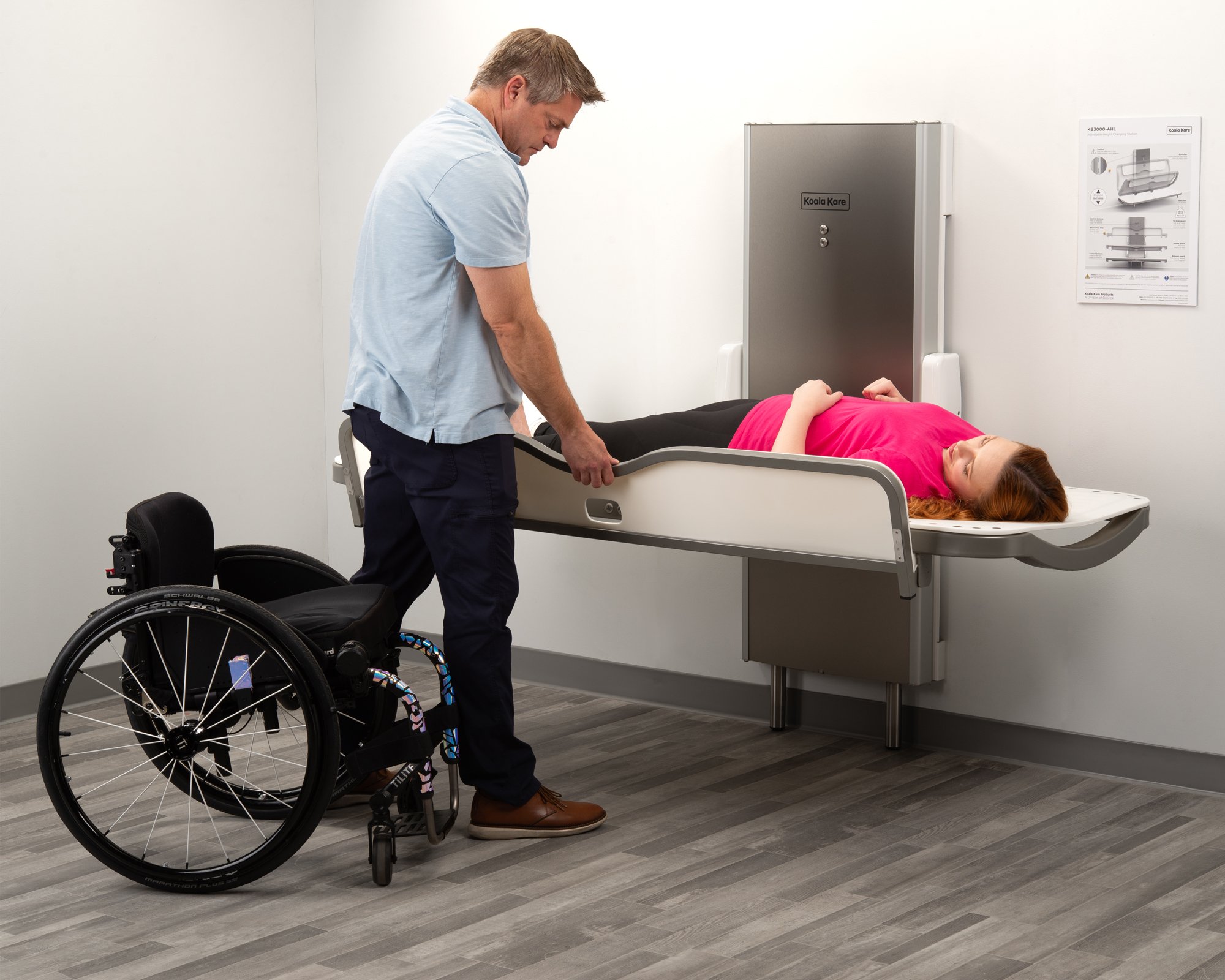
The Koala Kare KB3000-AHL Adjustable Adult Changing Station in use with a wheelchair for scale.
A caregiver assists an adult on a Koala Kare KB3000-AHL height-adjustable adult changing station. Learn about these stations and how to specify them with the Dignity in Design CE course. 

What is an adult changing station? 

An adult changing station is a height-adjustable table designed for individuals who cannot use a standard or ADA-compliant restroom for their personal care needs. While often found in a single-user or family-assisted public restroom, the table itself is the critical component that:

  • Supports all ages from 2 through adulthood
  • Provides a heavy-duty capacity, typically rated to at least 440 lbs

By adding these units to a dedicated universal or family-assisted restroom, those who use them maintain their privacy and dignity while changing clothes, managing catheters, or replacing incontinence pads.

Even if you feel you know the ADA requirements for bathrooms backward and forward, this new CE course is designed to ensure you’ll be ready to specify the main components of an adult-size changing station and understand the inclusive features of an individual restroom equipped with such a station.

Once you are ready to specify a station, Koala Kare Products offers two units:

  1. KB3000-AHL Adult Changing Station for high-traffic public spaces such as airports and stadiums
  2. KB2600 Adult Changing Station, a contemporary model often specified for controlled environments such as small schools, medical offices and houses of worship.

What are the design considerations when adding an adult changing station?

These spaces typically require a larger footprint than a standard ADA restroom to account for the table’s bed in the down position, plus the required clear floor space for a wheelchair. Also, height-adjustable units require structural blocking in the wall to support the user and a dedicated electrical circuit, usually 120V.

While the Dignity in Design course dives deep into the specific dimensions, there are three critical areas you should consider:

  1. Structural support: Does your wall assembly have the reinforced blocking required for a rated capacity of 440 lbs.?
  2. Power requirements: Have you coordinated with your electrical engineer for the dedicated circuit needed for height-adjustable units?
  3. Clearance envelopes: Have you accounted for the fold-down footprint and the wheelchair maneuverability space?

The full course covers how to analyze design considerations for these dedicated restrooms, including space, layout, structural, and other compliance criteria.

Are adult changing stations required?

From legislative mandates to changing code requirements, architects and designers should be aware of this solution that brings accessibility to people with disabilities, specifically those who are nonambulatory or have self-care challenges. Although the Americans with Disabilities Act does not yet require adult changing stations, building codes and other legislation now address this need.

The International Building Code includes a requirement that adult changing stations be provided in assembly and mercantile spaces with family or assisted-use toilets, college facilities, assembly spaces, and highway rest stops/service plazas, and that these stations meet defined accessibility and location criteria. Review the ICC A117.1 (Accessible and Usable Buildings and Facilities) to see the technical standards for how adult changing stations are built and check the code in your locale before starting a new project.

The Federal Aviation Administration Reauthorization Act of 2024 requires enhanced accessibility accommodations at medium and large U.S. airports, including provisions that drive the installation of adult changing stations in passenger terminal facilities by 2030.

Nine states have enacted legislation requiring these stations, and multiple other states have pending or proposed legislation. Whether you are designing for projects in California, Illinois, or Ohio staying ahead of state-specific adult changing station mandates is critical. See more details with our legislative map.

Who benefits from adding an adult changing station?

When the scope of disabilities is fully understood, the need for dedicated, inclusive restroom accommodation becomes profound. These dedicated, private restroom facilities are ideal for anyone with:

  • Mobility disabilities
  • Cerebral palsy
  • Multiple sclerosis
  • Muscular dystrophy
  • Spina bifida
  • Severe anxiety
  • Autism
  • Advanced dementia
  • Inflammatory bowel diseases
  • Crohn’s disease
  • Epilepsy or conditions causing seizures

Without these stations, caregivers are often forced to change adults on restroom floors — an immense hygiene and safety risk for both the user and the caregiver. Alleviating that concern for caregivers is part of the reason this course credit is Health, Safety, and Welfare–approved.

Plus, the impact is material: 1 out of 4 Americans with mobility disabilities will leave a business and never return if they encounter an accessibility barrier.

What are my next steps?

Head to Architectural Record to find the Dignity in Design CE course.

Once you’ve completed the course, reach out to a Koala Kare Products representative for answers to any questions you may have about the product, specification, maintenance, installation, and more. Or visit koalabear.com.

Part 6: Doctor’s Offices & Medical Facilities — Care Should Begin with Safety and Dignity

Note: This post continues our series on improving public accessibility by installing universal changing stations in key gathering spaces. See Part 1 here.

Medical offices buildings, physical therapy clinics, rehabilitation centers, and other such facilities exist to provide healing, comfort, and support. But what happens when these places fail to meet a basic human need?

Many outpatient facilities still lack adult changing stations, leaving patients and caregivers without a clean, safe, and appropriate space to manage personal care. This disconnect between the clinic’s mission and its infrastructure creates unnecessary hardship on the cared-for and caregiver.

While exam rooms at many doctor’s offices are designed for accessibility, public washrooms in medical plazas and PT clinics may not have a dedicated space to provide dignified incontinence care to those who cannot use a standard restroom. Caregivers are forced to improvise in undignified, unsafe ways — compromising both hygiene and respect.

Meeting a Growing Demand

The need for an adult changing station is accelerating. There are 70 million adults with disabilities, and by 2030, all baby boomers will be older than 65. That shows there is a need for these accommodations in public medical spaces such as:

  • Physical and occupational therapy centers: Where patients may experience fatigue or reduced mobility following intensive treatment.
  • Geriatric care clinics: For older patients with limited mobility or incontinence.
  • Neurology and stroke centers: Where patients may have complex transfer needs that cannot be accommodated in a standard bathroom stall.
  • Pediatric specialty offices: For older children with disabilities who have outgrown standard baby changing tables. 

Safety in Every Setting

As legislative momentum to require adult changing stations in public places grows, doctors and clinic owners can get started now to offer comfort, safety, and respect to everyone who comes to their office.

By providing a secure, hygienic, and private space for changing, you will:

  • Protect patient dignity and caregiver well-being
  • Prevent injury to patients and caregivers through appropriate lift-assisted support
  • Reinforce your commitment to comprehensive care

When facility managers prioritize these accommodations, that commitment to excellence will be reflected in patient satisfaction ratings and the practice’s overall reputation.

Bringing an Adult Changing Station to Your Practice

The ease of use and safety of the Koala Kare KB2600 Adult Changing Station is ideal for many public buildings. The features include: 

  • Weight capacity: Supports up to 440 lbs. (200 kg.), accommodating a wide range of patient profiles.
  • Powered height adjustment: With the handheld device, the table lowers to 12 inches and raises to 37 inches, allowing for smooth, level transfers from a wheelchair to the changing surface.
  • Hygienic design: Nonporous, high-tension vinyl is resistant to fluids and easy to disinfect between uses.
  • Fail-safe features: Integrated battery backup ensures the unit remains functional even during power interruptions.
  • Foldable design: The unit folds against the wall when not in use, preserving the 60-inch turning radius required for ADA-compliant restrooms.

Providing an inclusive environment is a cornerstone of modern healthcare. Stay ahead of any legislation mandates and enhance your practice’s accessibility today. Contact a representative to learn more about installing adult changing stations at your office.

Read the Rest of the Series

Part 5: Airports — Dignity Shouldn’t Be Grounded

Note: This post continues our series on improving public accessibility by installing universal changing stations in key gathering spaces. See Part 1 here.

Airports are gateways to the world, but for many travelers with mobility challenges, those gateways can also feel like barriers.

While most airports have made strides toward accessibility with ramps, elevators, and family restrooms, most terminals are still missing one essential feature: dedicated restrooms with adult changing stations.

These products, also referred to in federal legislation as a universal changing station, are a specialized space designed to provide a safe, sanitary, and dignified area for individuals with disabilities who cannot use a standard toilet. While the law is changing, the current gap in infrastructure leaves travelers and caregivers in a difficult position.

The Accessibility Gap in Air Travel

Travelers may need to manage long security lines, delayed flights, and limited restroom availability. Additionally, for adults and children with disabilities who require assistance with personal care, standard restrooms simply aren’t enough. Caregivers are left with the options of using the restroom floor or makeshift surfaces that are unsanitary, unsafe, and deeply undignified.

Without adult changing stations, these travelers may choose to avoid flying altogether, cutting off access to opportunities, experiences, and independence. By including a dedicated space with powered, height-adjustable adult changing tables, these facilities provide:

  • Safe and hygienic travel for adults with disabilities and their caregivers
  • Dignity and privacy during an essential daily routine
  • Peace of mind that encourages more travelers with disabilities to fly

Why Airports Must Adapt: The FAA Reauthorization Act of 2024

Millions of adults live with a disability and many travel for work, family, or medical reasons. As airports compete to improve the passenger experience, adult changing stations are a powerful investment in accessibility and humanity that’s soon to be required.

Congress passed the Federal Aviation Administration Reauthorization Act of 2024, which requires all medium and large U.S. airports to install and maintain at least one universal changing station in their passenger terminal buildings.

The act isn’t just a suggestion — it’s a requirement for these airports to maintain their federal funding eligibility.

  • Timeline for compliance: Guidance on comprehensive accessible design standards is expected by 2026. Airports have until fiscal year 2030 to meet the new requirement.
  • Planning for the future: While the deadline seems distant, the planning, design, and procurement phase starts now. 

There are thousands of airports in the U.S., and 500 of those are public-use and eligible for federal funding, according to the U.S. National Plan of Integrated Airport Systems. A little more than 30 U.S. airports, including Orlando (MCO), Chicago (ORD), Minneapolis (MSP), Phoenix (PHX), and Seattle (SEA), have already installed adult or universal changing stations, receiving widespread praise from advocacy groups and travelers alike.

While the FAA Reauthorization Act focuses on large hubs, smaller airports stand to gain a competitive edge by acting early. Accessible tourism is a rapidly growing market. By installing universal stations now, airports can market themselves as barrier-free hubs, attracting loyal travelers who prioritize dignity and safety.

Plus, when an airport is seen as accessible-friendly, these travelers, caregivers, and families are more likely to choose that hub, spending money at terminal concessions and duty-free shops. That turns adding a height-adjustable adult changing station into an investment for future revenue, not just a cost.

Is your terminal ready for 2030? 

For those medium and large airports without an adult changing station, now is the time to get started. Moreover, it’s more cost-effective to integrate these stations during scheduled terminal refreshes than to perform a rushed, standalone retrofit as the 2030 deadline looms.

To meet these upcoming mandates, Koala Kare’s KB3000-AHL Adult Changing Station is designed for the needs of high-traffic environments like airports. Features include:

  • 500 lbs. weight capacity
  • A height-adjustable changing surface controlled by buttons on the bed or the face of the wall cover.
  • Integrated recessed height controls designed to withstand tampering
  • 2” powder-coated, rust-free steel tubing
  • An IPX4 rating, which means the unit can withstand significant exposure to water without damage to its electrical components
  • A backup battery to guarantee operation even during a power outage.
  • Smooth polyethylene changing surface, that is vandal-resistant and can be easily wiped down and cleaned

For airport facility managers, the IPX4 rating is critical because it allows janitorial teams to perform deep-sanitation routines without worrying about damaging the adult changing station. Similarly, the recessed height controls are vital in a 24/7 public environment where equipment is subject to high-frequency use and potential tampering.

Learn more about Koala Kare’s adult changing stations, from technical specifications and safety considerations to maintenance needs, and installation videos.

Read the Rest of the Series

Part 4: Highway Rest Stops & Travel Centers — Accessibility Should Travel with You

Note: This post continues our series on improving public accessibility by installing universal changing stations in key gathering spaces. See Part 1 here.

For many travelers, hitting the open road means adventure, freedom, and discovery. But for millions of people with mobility challenges and their caregivers, road trips can quickly turn from liberating to limiting. The reason? A lack of accessible facilities along the way.

Highway rest stops and travel centers are essential waypoints for travelers across the country. They offer food, fuel, and restroom breaks. But too often, they fail to provide one of the most crucial elements of accessibility: adult changing stations.

More than 70 million U.S. adults live with a disability, according to the Centers for Disease Control, and those in this group who need an adult changing station are faced with choices that undermine the very spirit of the journey.

The Hidden Barriers on the Open Road

For individuals who require assistance with toileting, whether due to a disability or a medical condition, standard accessible stalls are not designed or intended to address their needs.

When there’s no commercial adult changing station available, caregivers are often forced into undignified and unsafe solutions such as:

  • Changing loved ones on restroom floors
  • Returning to vehicles for makeshift solutions
  • Skipping bathroom breaks altogether
  • Cutting trips short or avoiding them entirely

When highway rest stops fail to accommodate all travelers, they send a message that some journeys aren’t meant for everyone.

The Ripple Effect: Families, Caregivers and Independence

As more facilities prioritize accessibility in airports, stadiums, and public buildings, the same commitment must extend to our nation’s highways. As public expectations increase for adult changing stations, legislation has also been proposed and enacted to support this movement.

True universal design (including adult changing stations) supports extending accessibility to every mile.

Consider a parent traveling with a teenager who uses a wheelchair or an adult caring for an aging parent. Without the right facilities, planning even a short trip becomes a logistical puzzle. Many families limit their travel or stick to familiar routes, not because they want to, but because a lack of proper toileting and changing options dictates their options.

When dedicated restrooms with adult changing stations are available, the road opens up again. Families regain independence. Caregivers find a sense of relief. And everyone travels with dignity.

The Case for Rest Stops & Travel Centers

By adding adult changing stations, highway rest stops and travel centers can:

  • Meet the needs of millions of travelers
  • Comply with evolving restroom accessibility standards
  • Demonstrate a commitment to inclusion
  • Enhance visitor satisfaction and loyalty

Highway environments demand equipment that is as tough as it is reliable. The Koala Kare KB3000-AHL Adult Changing Station is the workhorse needed for a 24/7 rest stop environment.

  • Built for high traffic: The unit’s IK10 rating, 500 lbs. tested weight load, and robust construction with a steel frame ensure it can handle continuous, unsupervised use across all hours of the day.
  • Maintenance: The non-porous, plastic changing surface is durable and easy to clean and even hosed down if needed, and no exposed controls or wires discourage vandalism.
  • Safe Operations: The height of the changing surface adjusts at the push of a button to enable safe transfer between the station and a wheelchair.

For owners of private travel centers and service plazas, there are significant benefits to your business. The World Health Organization estimates that up to 20% of the global population experiences a disability, and this group’s spending power is in the trillions. Providing proper facilities allows travel center owners to tap into the so-called Purple dollar, the collective spending power of these families.

A Call to Make Every Mile Inclusive

By equipping highway rest stops and travel centers with dedicated restrooms for adult changing stations, we can ensure that accessibility doesn’t stop where the pavement begins. Because every traveler deserves dignity, comfort, and the confidence to go anywhere.

Learn more about Koala Kare’s adult changing stations, from technical specifications and safety considerations to maintenance needs, and watch installation videos. Plus, fill out the form to connect with your local Koala Kare representative to learn more about adult changing stations and their installation.

Read the Rest of the Series

Part 3: Seasonal Attractions & Entertainment Venues — Accessibility Shouldn’t Take a Back Seat

Note: This post continues our series on improving public accessibility by installing universal changing stations in key gathering spaces. See Part 1 here.

While many seasonal attractions and entertainment venues have taken strides to improve accessibility with features such as ramps, elevators, and accessible parking, one essential feature remains missing in far too many places: adult changing stations. For those within the group of Americans with a disability who need assistance in the bathroom and their caregivers, something as simple as using the restroom can turn a day of fun into a day of frustration or even embarrassment.

When visitors plan a trip to a favorite holiday light display, county fair, music festival, or amusement park, they expect joy, not stress. Yet without proper facilities, these spaces can unintentionally exclude a significant portion of their audience. When inclusion is the deciding factor for a group of a dozen ticket-paying visitors attending an event, that moves it from a nice-to-have to an essential way to do business.

In some cases, if even one person in the family can’t go, the entire group stays home.

The Accessibility Gap in Seasonal Fun

Seasonal attractions are designed to bring communities together to celebrate, create memories, and share joy. But for individuals with disabilities who require assistance with using the facilities, the absence of adult changing stations means making choices:

  • Cut the outing short
  • Attempt unsafe or unsanitary diapering or toileting in public view
  • Skip the event altogether

Portable restrooms and standard accessible stalls simply aren’t enough. Even a wheelchair-accessible stall still lacks the space and equipment needed for adults who require assistance. Without a private room and a height-adjustable adult changing station, caregivers are forced to improvise, often on restroom floors, in vehicles, or not at all.

Behind every person who needs an adult changing station is a network of caregivers and loved ones who are deeply affected by the lack of facilities. A parent caring for a teen with cerebral palsy, a spouse supporting a partner with multiple sclerosis, or an adult child assisting an aging parent with mobility limitations, each faces the same challenge: how to meet basic needs in public spaces that aren’t built for them.

When attractions overlook adult changing stations, they’re not just missing an amenity; they’re missing an opportunity to serve entire families who want to participate in community life.

Seasonal Doesn’t Mean Exempt from Inclusion

Whether it’s a summer carnival, a haunted hayride, or a holiday market, accessibility should never be an afterthought. Temporary and seasonal events often attract lengthy visits by large crowds and multigenerational families, making inclusive facilities more critical.

But even for temporary and outdoor events, organizers can still provide accessibility that doesn’t require a brick-and-mortar building. Many high-end portable restroom companies now offer trailers that can be equipped with an adult changing station. By requiring vendors to provide accessible trailers, any field or parking lot can be inclusive.

Ensuring there are adult changing stations available in a private space, signals a commitment to true accessibility. It says: Everyone is welcome here.

Building Brand Loyalty Through Accessibility

Inclusion isn’t just a social responsibility; it’s a powerful driver of revenue and brand loyalty. Families within the disability community are highly connected and loyal. Becoming a safe harbor destination with proper facilities creates word-of-mouth marketing that no ad campaign can buy.

When families know an attraction accommodates their needs, they stay longer, spend more, and share their positive experiences with others. Beyond economics, offering adult changing stations demonstrates social responsibility and aligns with evolving accessibility standards.

Built for the Peak Season Grind

Seasonal attractions face a unique challenge: They go from empty to maximum capacity in a matter of days. Your equipment must be as resilient as your staff.

The Koala Kare KB3000-AHL Adult Changing Station is engineered to handle the peak season rush with features designed for high-traffic, high-intensity environments:

  • Robust durability: With an IK10 impact rating, these units are vandal-resistant and built to withstand the rigors of public fairgrounds and stadiums.
  • Substantial weight capacity: A safe working load of 500 lbs. (227 kg.) ensures that you can safely accommodate visitors of all sizes and needs.
  • Easy to clean: The crevice-free surface is made of durable, nonporous plastic with a rust-free frame making the unit fully rinsable and suitable for wet environments.

Koala Kare Products believes that public spaces, temporary or permanent, should not force families to choose between dignity and participation. Equipping seasonal attractions and entertainment venues with adult changing stations can transform frustration into freedom.

Don’t let facilities be the reason a visitor stays home. Fill out our contact form to connect with the Koala Kare team to see how our adult changing stations can be integrated into your permanent facility or mobile restroom fleet.

Read the Rest of the Series

Part 2: Museums & Culture Centers — Accessibility is Part of the Experience

Note: This post continues our series on improving public accessibility by installing universal changing stations in key gathering spaces. See Part 1 here.

Museums are the custodians of our collective history and the incubators of our future creativity. Their primary goal is to tell stories that resonate with everyone. However, for adults living with a disability, the story is often interrupted by physical barriers that go unnoticed by the average visitor.

When we think of accessibility, we often focus on wheelchair ramps, captioning on video exhibits, or sensory-friendly hours. While these are vital, true inclusivity requires a 360-degree view of the visitor experience.

By following the concept of universal design, cultural institutions can identify and complete the often-overlooked facility upgrades that transform a museum from compliant to truly welcoming.

The Difference Between ADA Compliance & Universal Design

For facility managers and architects, it is crucial to distinguish between meeting regulations and meeting human needs.

  • ADA compliance: The legal baseline that ensures an independent person with a disability can physically enter the building and access services (e.g., door width, elevator access, grab bars).
  • Universal design: A philosophy that says public environments should be usable by all people, to the greatest extent possible.

By following the concept of universal design, cultural institutions can identify and complete the often-overlooked facility upgrades that transform a museum from compliant to truly welcoming, ensuring that a visitor using a powered wheelchair, a parent with a stroller, or a neurodivergent visitor can all navigate the space with equal dignity and ease.

The Duration Gap in Cultural Institutions

One of the most significant metrics for museum success is how long a visitor stays. Unfortunately, there is often a duration gap between able-bodied visitors and those with mobility challenges.

The ability to remain in the building comfortably can be another challenge for people with disabilities.

For caregivers assisting individuals with mobility challenges or disabilities, the length of a visit is often dictated by the restrooms. If a museum has world-class exhibits but lacks dignified restroom facilities for adults and older children, the clock is ticking the moment the family arrives.

The Caregiver’s Dilemma

When the necessary infrastructure is missing, caregivers must decide to:

  1. Cut the visit short: Missing out on exhibits or educational programs.
  2. Leave the premises: Exiting the museum to find facilities elsewhere.
  3. Improvise in unsafe ways: Changing a loved one on a restroom floor, which is unsanitary, unsafe, and undignified.
  4. Not to visit at all: Sadly, many people with disabilities will forgo visiting due to a lack of proper restroom resources.

Why the Restroom Is Part of the Experience

It may seem functional, but the restroom is an emotional touchpoint. Providing an adult changing station signals to a visitor: “We expected you, we value your presence, and we want you to stay.”

Leading institutions such as the American Museum of Natural History in New York City, the Field Museum in Chicago, and The Henry Ford museum in Dearborn, Michigan, have recognized this by installing universal changing tables.

Add Accessibility with an Adult Changing Station

As legislative momentum grows to require adult changing stations, it’s important to pick a solution with the right features to serve visitors. A truly inclusive facility includes adult changing stations that include:

  • Powered height adjustability: Equipment that lowers enough for safe transfer and raises enough to be waist height to protect caregivers from back strain.
  • High weight capacity: Standard baby changing stations cannot support older children or adults. Universal stations should support at least 500 lbs. (227 kg.).
  • Hygiene-first design: Surfaces should be crevice-free and impact-resistant (rated IK10) to withstand high-traffic environments and rigorous cleaning schedules.

The Case for Inclusion

Investing in accessibility is not just a moral imperative; it is a sound operational strategy. The Purple dollar (the spending power of disabled households) represents a significant market.

When museums invest in adult changing stations and universal design, they:

  • Extend visit times: Visitors don’t have to rush home.
  • Encourage repeat visits: Visitors return to venues where they know their needs are met.
  • Boost reputation:Museums are public-facing entities. Being known as a leader in inclusion attracts positive press, grants, and community support.

Making Inclusion Part of Your Story

When cultural institutions invest in “invisible infrastructure” — support systems unnoticed by the majority but critical to the few — they transform from places that merely educate and entertain into spaces that truly embrace the entire community.

At Koala Kare Products, the KB3000-AHL Adult Changing Station can help museums meet rigorous standards of safety, dignity, and durability. Inclusion isn’t an afterthought — it’s part of the experience.

Frequently Asked Questions

Are adult changing stations required in museums under current building codes?

While the ADA sets the baseline for accessibility, the International Building Code has evolved to include more rigorous standards. As of the 2021 and 2024 editions, the IBC requires adult changing stations in certain large assembly occupancies, often including large museums, science centers, and galleries with high occupancy limits. Even in regions where this code hasn’t yet been adopted, leading institutions are installing them voluntarily to future-proof their facilities and meet the higher standard of universal design.

Where is the optimal location for an adult changing station within a museum?

To maximize dignity and usability, adult changing stations should be located in single-occupancy family or companion care restrooms, rather than within gendered multi-stall restrooms. Ideally, these facilities should be centrally located near main exhibits or food halls to minimize travel time. For larger institutions, best practices suggest installing a station on each major floor or wing to ensure no visitor has to cut their experience short to find a restroom.

Read the Rest of the Series

Part 1: Stadium & Arena Restrooms — Be a Fan of Accessibility

Note: This post is the first in our series on improving public accessibility by installing universal changing stations in key gathering spaces

The lack of accessible facilities for a significant part of the <70 million adults with disabilities and their support networks prevents these fans from fully engaging in public life.

Commercial venues such as stadiums and concert halls succeed in prioritizing physical access, the absence of adult changing stations leaves a significant gap in true accessibility. In our six-part adult changing stations series, these blogs explore how installing universal changing areas at stadiums, festivals, rest stops, and hospitals creates an immediate, positive impact.

The Hidden Challenge Behind the Excitement

The big game and the latest concerts are more than just a good time. It’s the anticipation as fans stream into the stadium or arena, the thrill of singing along with the crowd, the pride of wearing team colors, and the joy of sharing traditions across generations.

But the absence of adult changing stations in large venues often turns what should be a joyful outing into a stressful experience for many fans with mobility issues or disabilities and their caregivers.

Most stadiums and arenas are designed with energy and spectacle in mind, from the big screens and booming sound systems to the state-of-the-art seating. Yet one of the most fundamental needs is often overlooked: safe, private, and accessible facilities for every fan.

Without adult changing stations, caregivers have to decide if they should attempt a change in a public restroom that isn’t equipped for their needs? Or should they resort to the floor of a restroom or a car in the parking lot? Or do they leave early and miss the moments that make the event special?

These choices strip away dignity, compromise safety, and send a message — however unintentional — that some fans don’t fully belong. For some, this reality means skipping live events altogether.

The Case for Adult Changing Stations in Large Venues

Accessibility is more than getting through the stadium gates or finding the right seating section. True inclusion means designing every part of the experience with all fans in mind. Adult changing stations are a simple but powerful step toward equity.

By installing adult changing stations in stadiums and arenas, you:

  • Restore dignity: Fans with mobility challenges deserve the same respect and comfort as everyone else.
  • Relieve stress: Attendeescan enjoy the game or concert without worrying about where or how to manage basic needs.
  • Encourage fan participation: More fans can confidently attend live events while getting their needs met.
  • Set a new industry standard: Just as accessibility ramps and ADA-compliant seating are now a given, adult changing stations should be, too.

Legislative momentum is building across the country, with many regions introducing mandates for adult changing stations in large public facilities to ensure equitable access.

Inclusion Belongs Everywhere — Even the Restrooms

Sports and concerts have the unique power to unite, boosting collective energy while cheering with strangers who suddenly feel like family. It’s about belonging.

That’s why inclusion cannot stop at the entrance gate or the concourse. It must extend to every corner, including the space for everyone to use the restroom. When adult changing stations and privacy are missing, an entire community of fans is excluded from the full experience.

Stadiums and arenas have the opportunity to lead the entertainment industry by making these stations a standard feature. Doing so is a commitment to equity, dignity, and respect. It’s a statement that says every fan matters.

These events aren’t just about the players on the field or the performers on stage. It’s about the fans, the grandparents bringing their grandchildren to their first game, the lifelong supporters who’ve been coming for decades, and the families who make memories together in the stands.

A Call to Action for Stadiums and Arenas

At Koala Kare Products, we believe that everyone deserves to be part of those moments. Inclusion belongs everywhere. By including private space for adult changing stations, these locations ensure these events are truly for everyone, today, tomorrow, and for generations to come.

Learn more about Koala Kare’s adult changing stations, from technical specifications to safety considerations and maintenance needs, and watch installation videos.

Frequently Asked Questions

What is an adult changing station? 

An adult changing station, also referred to in federal legislation as a universal changing station, is a specialized facility designed to provide a safe, sanitary, and dignified space for individuals with disabilities who cannot use a standard toilet and require assistance with toileting or diapering.

While similar in concept to a baby changing station, an ACS is engineered as a piece of medical-grade equipment adapted for public spaces. It is designed to address the needs of individuals with disabilities, mobility challenges, incontinence, or other special needs, as well as the safety of their caregivers.

What is the legislation concerning adult changing stations?

Even in the absence of a federal ADA mandate, governmental and nongovernmental bodies throughout the United States, Canada, and across the world have introduced or are considering requirements and recommendations related to these stations in public facilities. Review this interactive legislation map to find information related to these developments in different regions.

Read the Rest of the Series